
5 things to consider before renovating your bathroom
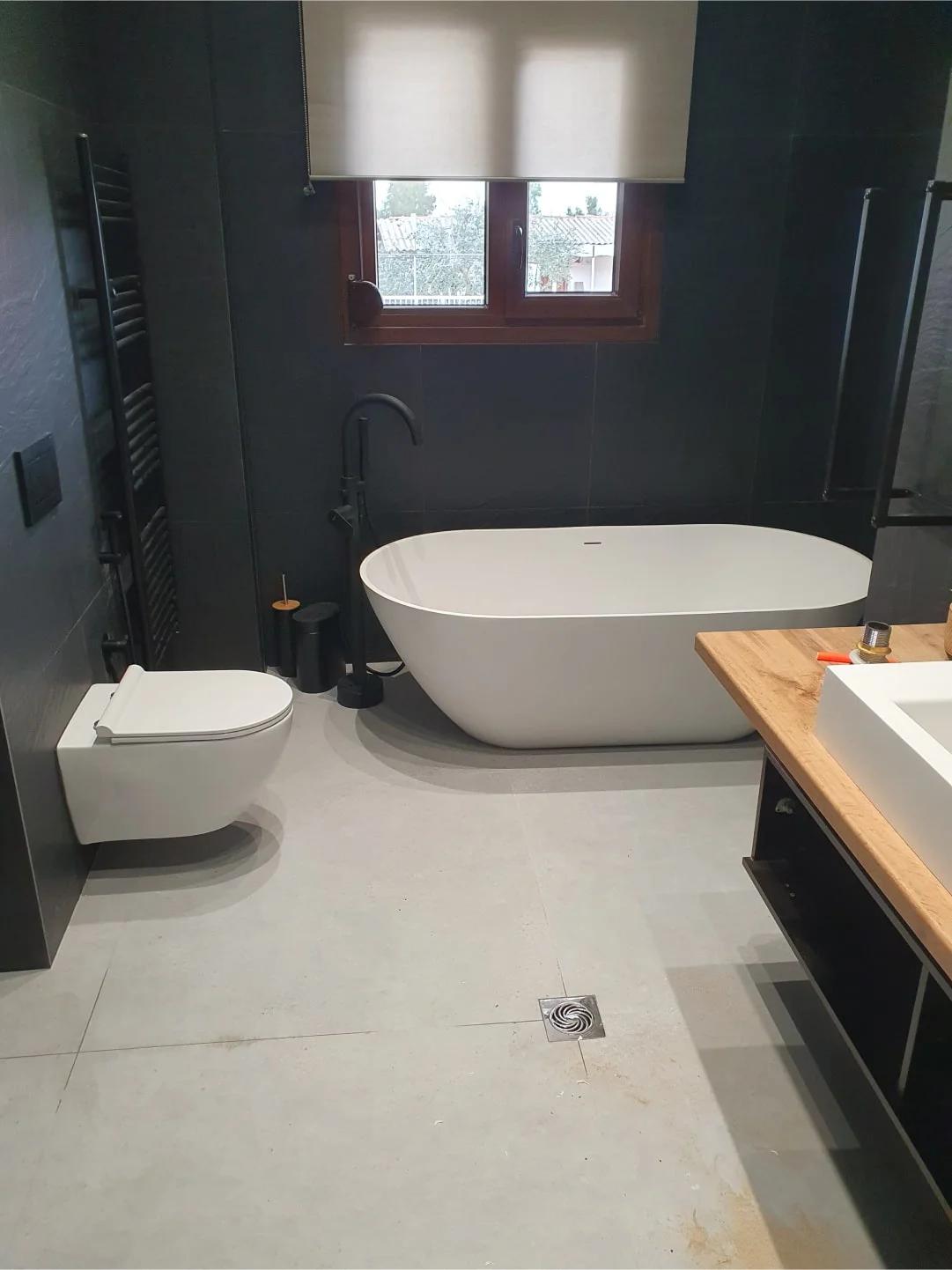
Before you choose tiles, the plumbing, waterproofing and ventilation decide the outcome. These five points determine whether the renovation lasts or sends you back to the start.
Most bathroom renovations start with the tiles. They are the easiest part to picture — and the least critical. What actually decides whether the bathroom will trouble you again in three years sits underneath, and is settled before the first tile goes on.
1. What is behind the tiles
In homes that have never been renovated, the pipework is often as old as the building. Old steel pipes corrode from the inside, narrow and drop the water pressure; old waste pipes lose their fall and start to smell. Once the wall is open, replacing them costs comparatively little. A year later, it means breaking apart what was just finished.
The question worth asking before work begins is not which tile goes on, but which of the things you will never see is being replaced and which is staying.
2. Waterproofing is the work you will never see
Tiles and grout are not waterproof. Water passes through the grout and stops — or fails to stop — at the waterproofing layer underneath. If that layer is missing or was rushed, the damp will show up on the adjoining wall or on the ceiling of the flat below.
The critical points are the shower area, the wall-to-floor junction and anywhere pipes pass through. It is work that cannot be inspected afterwards, which is exactly why it is worth discussing beforehand.
3. Ventilation decides whether the mould comes back
Black spotting in the grout and corners is not a cleaning problem — it is moisture that never leaves the room. A bathroom without a window needs mechanical extraction that genuinely vents the air outside, not a fan that simply moves it around.
If your current bathroom grows mould, new tiles will not solve it. It returns on top of them.
4. The decisions that must be fixed before the works start
Some choices cannot be changed without cost once work has begun, because they determine where the pipes and cables run:
- Position of the WC, basin and shower — moving them means new waste runs
- Shower or bath, and whether the shower will be level with the floor
- Surface-mounted or concealed taps and cistern
- Positions for lighting, sockets and the heated towel rail or radiator
- Tile dimensions — they affect the setting out and the number of cuts
Choosing sanitaryware and tiles before the works start avoids the two most common delays: the model that is out of stock, and the change of mind after the pipes are already in.
5. How you will manage while the bathroom is out of use
In a home with one bathroom, renovation means days without a shower in the house. This is not a detail — it is the most common reason a job gets rushed at the end.
Ask from the start what order the work follows, at what point the WC comes back into use, and how many days pass with nothing visible happening because materials are curing. Drying time cannot be compressed; if it is, the result shows later.
Before you ask for a quote
The more precisely you know what you want changed and what should stay, the more accurate the quote you receive — and the fewer times you will hear that something was not accounted for.
You can see completed bathroom renovations in our work, read what our services cover, or describe your bathroom to us through the contact form.
Frequently asked questions
It depends on their age and condition. Old steel pipes that have corroded internally are worth replacing while the wall is open, because doing it later means breaking the new tiles again. Where pipework has already been replaced recently, it is usually not necessary.
It is technically possible in some cases, but it conceals whatever is underneath: old waterproofing, pipework and any existing damp remain untouched. It also raises the floor level, which affects the door and the falls towards the drain.
It depends on whether the plumbing and electrics are being replaced or only the surfaces. A significant part of the time is not work but materials curing, which cannot be compressed. Ask for a stage-by-stage schedule alongside the quote, so you know when the WC comes back into use.
Need a quote for your project?
Tell us what you need done and we will come back to you with a specific cost and timeline.
Request a quote